
The Missing Link in Pain Medicine — Why We Treat a Multi-System Problem With Single-System Medicine (and Why Herbal Therapies Expose the Gap)
Key Takeaways
When Madam Irene Lo first came to our clinic, her right knee was swollen and visibly larger than her left. Her doctor had prescribed painkillers and d...
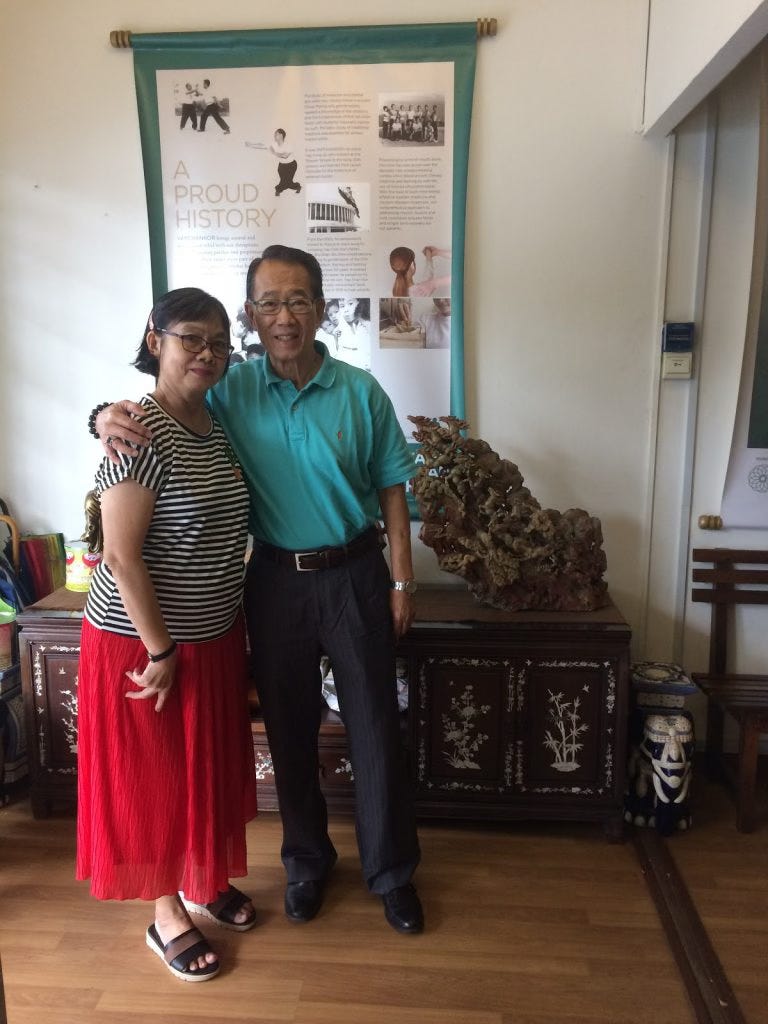
When Madam Irene Lo first came to our clinic, her right knee was swollen and visibly larger than her left. Her doctor had prescribed painkillers and dismissed it as a common problem.
Irene fully expected the medical system to provide a clear solution — she just didn’t realize the solution would depend entirely on who she asked.
Her GP said she had a common injury and prescribed painkillers and rest.
Likely, an orthopedic surgeon would diagnose osteoarthritis with an MRI and recommend knee-replacement surgery.
Friends and relatives suggested acupuncture, collagen injections, even stem cells.
Our physiotherapist diagnosed Stage 3 osteoarthritis and recommended exercise therapy with our anti-inflammation herbal patches.
Even if the diagnosis was the same, the treatment paths were completely different.
The problem wasn’t necessarily that no one knew what was wrong.
The problem was that each profession defined the problem differently enough to prescribe a different answer.
She wasn’t choosing between treatments.
She was choosing between models of pain — and no one told her that was what she was really deciding.
The Core Problem: Multi-System Pain vs Single-System Medicine
Chronic pain is a multi-system condition trapped inside a single-system healthcare model.
Pain is not a single process. It is the sum of
Tissue injury — muscles, joints, discs
Inflammation — immune activity, cytokines such as TNF-α and IL-6
Nerve sensitization — pain signals amplified by the spinal cord and brain
Movement dysfunction — stiffness, poor loading, compensations
Circulatory issues — reduced oxygen delivery to healing tissue
Psychological load — fear, stress, learned pain, expectation
Yet medicine separates these elements into professional silos.
Orthopedics treats structure.
Physiotherapy treats movement.
Neurology treats nerves.
Psychology treats fear and stress.
Pharmacology treats symptoms.
Traditional medicine focuses on inflammation and circulation.
Each lens captures one part of the process.
The patient experiences all of it.
This mismatch isn’t anyone’s personal failure — it’s how the system was built.
Why the Patient Always Feels Confused
Most patients believe medicine has a unified view of pain. It doesn’t.
It has dozens of competing frameworks that rarely overlap.
That’s why people with chronic pain often move through:
painkillers → scans → physio → injections → chiropractic → acupuncture → surgery → back to painkillers
At each stop, the explanation changes. The advice changes. The vocabulary changes.
Pain itself remains.
This isn’t patient failure or ‘doctor shopping’ — it’s a rational response to a fragmented system. Each provider offers what they know, and when it doesn’t fully work, patients naturally seek the next option.
The healthcare system forces patients to choose a lane when what they really need is coordination.
In practice, this means the loudest field — the one best at marketing — dominates public belief, not the one with the broadest understanding.
Modern culture favours the surgical and pharmaceutical lens because that’s the one with institutional authority, advertising budgets, and regulatory backing.
Patients end up buying into a treatment ideology whose results in chronic pain remain limited. The remarkable achievements of modern medicine in other domains lend an aura of certainty to pain management that the data itself doesn’t always support.
What Pain Science Actually Shows
In recent years, research has reframed pain entirely. It no longer fits neatly into “damage means pain — fix the damage” models.
Modern classification divides pain into three overlapping mechanisms:
Nociceptive: Pain from actual tissue damage (Example: Sprained ankle)
Neuropathic: Pain from injured or compressed nerves (Example: Sciatica, diabetic neuropathy)
Nociplastic: Pain that persists after tissues heal because the nervous system remains hypersensitive (“noci” = pain signal. Example: Chronic back pain, fibromyalgia)
Most chronic pain involves a mixture of all three.
Inflammation can sensitize nerves; nerve damage can alter movement; limited movement can prolong inflammation.
It becomes a feedback loop — not a linear path.
Which means single-system treatments (surgery alone, drugs alone, exercise alone) may help some, but seldom treat the whole loop.
How the Disciplines Split the Problem
Each specialty naturally sees pain through its own mechanism:
Orthopedics: structural damage → fix the structure.
Physiotherapy: movement imbalance → retrain movement, build capacity.
Pain medicine: nerve amplification → drugs, nerve blocks, neuromodulation.
Psychology: threat response → CBT, pain education, exposure.
TCM / Herbal therapy: inflammation and microcirculation → restore flow, modulate cytokines, support repair.
Every one of these is partly true.
Together, they form the whole.
But training, billing and research all operate in isolation — so no one owns the full map.
YCK Clinic Case 1: Madam Irene Lo — Knee Osteoarthritis
Diagnosis: Grade 3 knee osteoarthritis with swelling and loss of mobility
Prior care: Anti-inflammatory drugs and rest; pain worsened and function deteriorated leading to the patient requiring a walking stick to walk
YCK approach: Topical herbal anti-inflammatory patches + staged physiotherapy (ice → gentle heat → progressive movement)
Outcome: After ≈ 8 weeks she walked independently; 21 sessions produced stable relief
Her recovery wasn’t luck. It reflected how pain behaves when inflammation and function are targeted together.
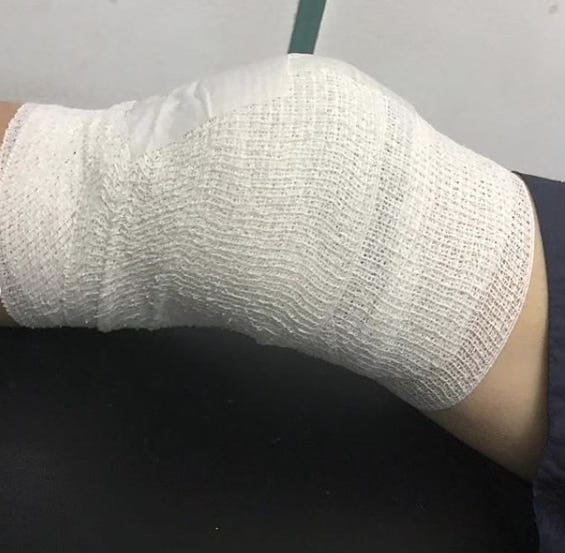
YCK Clinic Case 2: Madam Khoo C.S. — Hip and Knee Osteoarthritis
Diagnosis: OA of hip and knee
Prior care: Nine months of painkillers + acupuncture with little gain
YCK approach: Herbal anti-inflammatory therapy for circulation and cytokine control + physiotherapy for load retraining
Outcome: ≈ 70 % pain and mobility improvement after five sessions; less stiffness and better movement
These outcomes reflect what happens when treatment addresses multiple pain mechanisms simultaneously — not through any single ‘miracle cure,’ but through coordinated intervention.
The Research Blind Spot
Herbal anti-inflammatory therapy isn’t absent from mainstream care because it lacks biological rationale.
It’s absent because the research machinery was built for single-compound pharmacology.
Clinical trials usually test:
one molecule → one pathway → one endpoint → short duration.
A multi-herb formula may regulate TNF-α, improve micro-circulation, inhibit COX-2, calm neuronal excitability, and support repair at once.
That makes it biologically realistic — but methodologically “messy.”
Funding and publication systems reward simplicity.
Pharma economics reward patentability.
So the gap isn’t “no data” — it’s “no framework to test complex therapies.”
Yet we already know:
Imaging findings don’t predict pain (Brinjikji et al., AJNR 2015)
Multidisciplinary rehab outperforms single modalities (Kamper et al., Cochrane Review 2015)
Acupuncture provides durable benefit (Vickers et al., J Pain 2018)
But virtually no trials test herbal anti-inflammatory therapy plus rehab together.
It’s not ignorance — it’s a system mismatch.
This doesn’t mean all herbal formulations are equally effective, or that traditional approaches should replace proven interventions. It means the current research framework systematically excludes certain types of evidence that might inform better integrated care.
The Cost of a Single-System Model
This blind spot has real consequences.
Despite record spending and technology, the global burden of chronic pain has not fallen. Low back pain is the leading cause of disability worldwide. (WHO Global Burden of Disease 2019).
Surgery, imaging, and prescriptions have multiplied, yet long-term outcomes have hardly moved.
When results disappoint, we blame patients or “complex cases” instead of recognising that our system is simply too narrow for the biology it’s trying to fix.
Reframing the Question
If we stop asking “Which treatment works best?” and start asking “Which combination restores the body’s feedback loops?”, the logic changes.
Inflammation drives sensitivity.
Sensitivity drives disuse.
Disuse prolongs inflammation.
Break two parts of that loop, and recovery accelerates.
This is precisely what happens when herbal anti-inflammatory therapy and physiotherapy are combined.
It isn’t mysticism — it’s systems engineering applied to biology.
Where Medicine Needs to Go Next
The next advance in pain care won’t come from a new drug.
It will come from a new framework — one that finally studies what people actually do in the real world: combinations of treatments acting on multiple systems at once.
That means:
Designing trials that evaluate multi-component interventions, not just single molecules.
Funding integration research instead of only pharmaceutical discovery.
Training clinicians to recognise how structure, inflammation, movement and psychology interact.
Measuring outcomes that reflect function and quality of life, not only pain scores.
Medicine once unified anatomy, chemistry and surgery under one roof.
Pain care now needs the same integration across structure, function, inflammation and adaptation.
What This Means for Patients
You don’t need to choose one treatment philosophy exclusively
Ask providers how their approach addresses inflammation, movement, nerve sensitivity, and psychology
Look for practitioners willing to coordinate across disciplines
Be skeptical of anyone claiming their single approach solves everything
The Takeaway
Chronic pain is not a failure of medicine’s intelligence — it’s a failure of its design.
The body is systemic.
Pain is systemic.
Healthcare is not.
Herbal and physiologic therapies don’t sit outside science; they reveal the gap between how the body heals and how research measures healing.
The question isn’t whether conventional medicine or integrated approaches are ‘better.’ The question is: why are we still forcing a choice between them?
A Shared Responsibility
Clinicians must look beyond their silos.
Researchers must design trials that reflect biological complexity.
Patients deserve choices that are not limited by professional boundaries.
This is the goal of our Substack and pain clinics: to explore and build that missing bridge between systems of care — empirically, transparently, and publicly.
Disclaimer
This article is for informational purposes only and does not constitute medical advice. The case studies described represent individual outcomes and do not guarantee similar results.
If you are experiencing chronic pain or any health condition, consult a qualified healthcare provider for proper diagnosis and treatment. Do not discontinue prescribed treatments without professional guidance. Inform all your healthcare providers about any therapies you are using or considering.
The authors assume no liability for any consequences arising from the use of information in this article.
Our clinic cases represent individual outcomes and cannot substitute for controlled trials. They do, however, illustrate clinical patterns consistent with emerging pain science — patterns that deserve rigorous study.
References
WHO — Low Back Pain fact sheet (2023 update).
Low back pain is the leading cause of disability worldwide.
https://www.who.int/news-room/fact-sheets/detail/low-back-pain
WHO — 2023 Guidelines on Chronic Low Back Pain.
Context on global burden and recommended first-line care.
https://www.who.int/news/item/07-12-2023-who-releases-guidelines-on-chronic-low-back-pain
Brinjikji W, et al. MRI findings of spine degeneration in asymptomatic people: systematic review & meta-analysis. AJNR 2015.
(Shows imaging abnormalities are common without pain → structure ≠ symptom.)
PubMed: https://pubmed.ncbi.nlm.nih.gov/25430861/
Kamper SJ, et al. Multidisciplinary biopsychosocial rehabilitation for chronic low back pain. Cochrane Database Syst Rev 2014 (most-cited Cochrane review).
PubMed: https://pubmed.ncbi.nlm.nih.gov/25180773/
Vickers AJ, et al. Acupuncture for chronic pain — update of the individual patient data meta-analysis. J Pain 2018 (online 2017).
PubMed: https://pubmed.ncbi.nlm.nih.gov/29198932/
Weinstein JN, et al. Surgical vs. non-operative therapy for lumbar spinal stenosis (SPORT). NEJM 2008.
PubMed: https://pubmed.ncbi.nlm.nih.gov/18287602/
Sihvonen R, et al. Arthroscopic partial meniscectomy vs sham surgery for degenerative meniscal tear. NEJM 2013.
PubMed: https://pubmed.ncbi.nlm.nih.gov/24369076/
Geneen LJ, et al. Physical activity and exercise for chronic pain in adults — umbrella overview of Cochrane reviews. J Pain 2017.
PubMed: https://pubmed.ncbi.nlm.nih.gov/28436583/
Nijs J, et al. Nociplastic pain & central sensitization in musculoskeletal pain — clinical review. J Clin Med 2023.
Open-access: https://pmc.ncbi.nlm.nih.gov/articles/PMC10314229/
Zhao F, et al. Hydroxysafflor Yellow A (HSYA) from Carthamus tinctorius — pharmacological effects (systematic review). Front Pharmacol 2020.
PubMed: https://pubmed.ncbi.nlm.nih.gov/33536906/
Chao WW, Lin BF. Bioactivities of major constituents from Angelica sinensis (dang gui) — review. Chinese Medicine 2011.
PubMed: https://pubmed.ncbi.nlm.nih.gov/21851645/